While employment in the cell and gene therapy industry fell 22% over two years from 2023 to 2025, organisations are anticipating a return to growth, with over 2,400 new roles forecast by 2030. The data is presented today in the Cell and Gene Therapy Catapult’s (CGT Catapult) UK 2025 Skills Demand Survey, alongside recommendations about how to best support workforce growth and skills development over the next five years.
The findings from the 2025 survey indicate that the industry’s workforce has decreased by 1,386 roles since 2023. This drop in headcount has taken place across a range of specialisms, including: R&D and discovery; regulatory affairs; digital and informatics areas; clinical trials; and bioprocessing. Overall, bioprocessing has been less affected by the decrease in headcount than the industry as a whole, having experienced a smaller, 6%, decrease.
The reduction aligns with economic challenges which have contributed to increased caution in the sector. This is demonstrated by a decrease in overall industry investment from its peak in 2021, as reported by industry bodies such as the BioIndustry Association.[1]
Looking to the future, 70% of survey respondents are forecasting growth in their workforces, equating to an additional 2,419 roles expected by 2030. Bioprocessing is expected to be a key contributor to this increase, with 78% of the future roles planned to be in this area. If this growth takes place as expected, the size of the workforce, at 7,265, will exceed the previous highs seen in 2021 and 2023.
With most of the growth expected from 2028 to 2030, it is important for the industry to scope, design and implement skills and training programmes that will enable this growth to materialise.
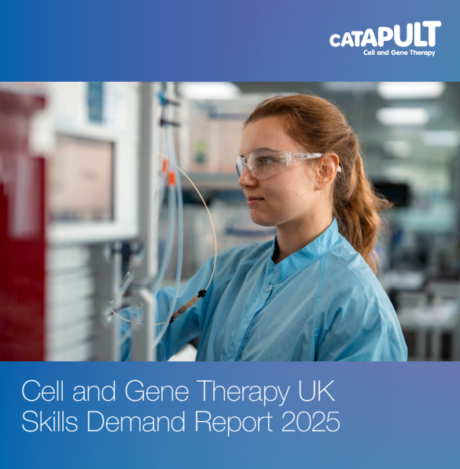
Click here to download the CGT Catapult Skills Demand Report 2025.
Despite the reduction in the last two years, the industry is in a strong position to grow. This growth will ensure there is capacity to develop and manufacture life-changing therapies at the scale required. Training provisions that provide both specialist and soft skills will play an important role in supporting this growth, attracting new talent, and upskilling the workforce in areas of need, such as bioprocessing, Good Manufacturing Practice, and use of digital tools
Matthew Durdy, Chief Executive of the CGT Catapult
[1] Bioindustry Association’s UK Biotech Financing 2025 report