Cell and Gene Therapy Catapult Annual Review
Helping companies scale and grow


Cell and Gene Therapy Catapult (CGT Catapult) is an independent innovation and technology organisation specialising in the advancement of the cell and gene therapy industry.
We deliver through the creation of powerful collaborations which overcome challenges to the advancement of the sector.

Our Vision A thriving industry delivering life-changing advanced therapies to the world
Our role
Our role is to create powerful collaborations which overcome challenges to the advancement of the sector.
How we work
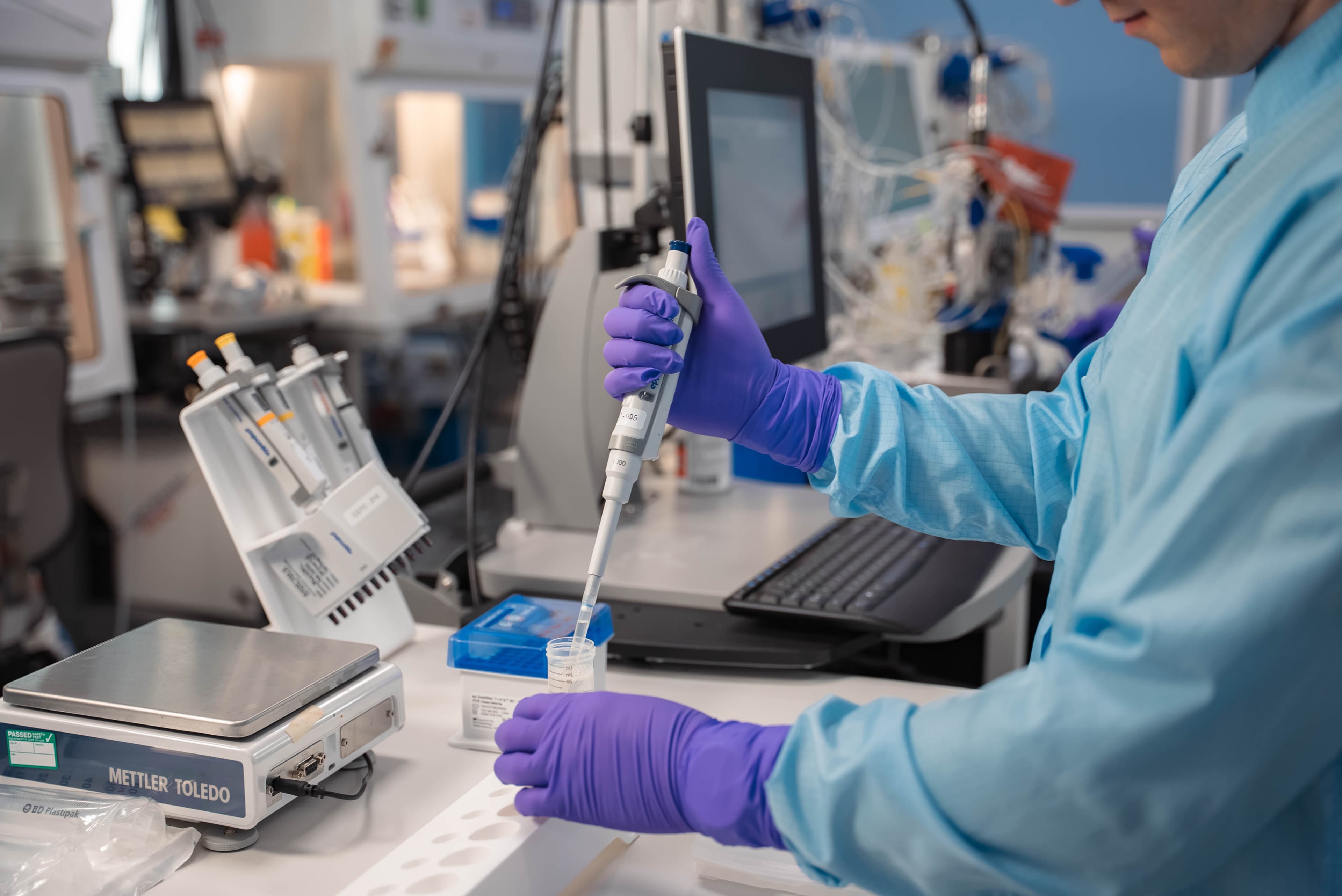
We are a team of experts covering all aspects of advanced therapies. Applying our unique capabilities and assets, we collaborate with academia, industry and healthcare providers to develop new technology and innovation.
Our impact
Our outputs leverage research, transform barriers into industrial advantage and attract investment for our collaborators. We help people acquire new skills, organisations establish new capabilities and policymakers develop new perspectives.
To advance the industry, we collaborate with:
academia and researchers,
to increase the flow and speed of translation of promising research into new therapies and supporting technologies...
industry,
to bring down the cost of goods and increase the capacity to meet the upcoming demand for advanced therapies...
healthcare services,
to increase access to clinical trials, uptake of approved products and bring down the cost of use
The partnerships we have developed have helped to position the UK as a global leader in the development of advanced therapies. The partnerships continue to drive growth and investment in the development of advanced therapy medicinal products (ATMPs) and realise value for the UK economy.
2024/25 CGT Catapult outputs and outcomes
- 127collaborative projects
- 27university and research institute collaborators
- 21international commercial collaborators
- 70companies collaborated with on ATMP innovation (60% of which are UK SMEs)
- £177min financing raised by our UK collaborators
- 9companies supported that are conducting clinical trials
UK ATMP industry growth and CGT Catapult impact
- Investment raised by companies active in the UK ATMP sector£0.77b2023£0.97b2024£0.41b2025
- Total ATMP GMP manufacturing space in the UK52,603m²202351,862m²202456,419m²2025
- Phase III clinical trials carried out in the UK each year412023412024422025
- Approved and reimbursed therapies in the UK based on indication(Prior year figures include minor corrections)72023122024172025
- Employment in the UK advanced therapies and bioprocessing industries(Data collected every two years)6,95620226,2322024

A statement from Our Chairman
The advanced therapy industry is critical to improving patient care, driving economic growth, and contributing to the Government’s ambition of making the UK one of the world’s top three life sciences economies by 2035.
Advanced therapies not only provide life-changing treatments for a range of devastating diseases, but provide an opportunity for the NHS to benefit from the one-time nature of many of these therapies, which has potential to alleviate pressure on waiting times and resources.


Dr. Jim FaulknerChairman
With this increased demand for advanced therapies, to realise their advantages for patients and support the Government’s mission of improving health, it is crucial that healthcare services are able to deliver these therapies on a large scale.
A statement from Our Chief Executive
With the Government focused on improving health and driving forward productivity and growth for the economy, the Catapults have a vital role to play providing expertise, access to innovative technologies, and attracting global investment into the UK.
At the CGT Catapult, in the past financial year, we supported 70 companies on advanced therapy innovation, with 60% of these being UK small and medium businesses.

Matthew DurdyChief Executive
The Catapults’ unique position, as a trusted intermediary between industry and regulators, and working with stakeholders across our respective sectors, enables us to identify industry-wide challenges and direct resources to overcome these.
Securing the benefits of advanced therapies in the UK CGT Catapult is focused on building a thriving advanced therapies industry, with the health and economic benefits that the industry creates being realised across the UK.
Accelerating the emergence of new therapeutics
For there to be a thriving industry, there needs to be a flow of therapies coming through clinical trials and entering commercial use. There is a growth in
approvals for advanced therapies, with two therapies receiving NICE approval in 2024. In the US and EU, there were 10 cell and gene therapies approved in 2024 alone.
While global investment in the industry has continued, companies face a challenge securing funding to progress their experimental therapies through the early stages, as clinical data is not yet available and investors are more cautious. Providing support to enable the translation of academic research in spin-out companies is crucial to ensuring there is a strong pipeline of therapies in development.
49 Phase II/III or Phase III clinical trials in the UK9.5% of all global ongoing ATMP trials with representation in the UK
Lowering cost and increasing supply
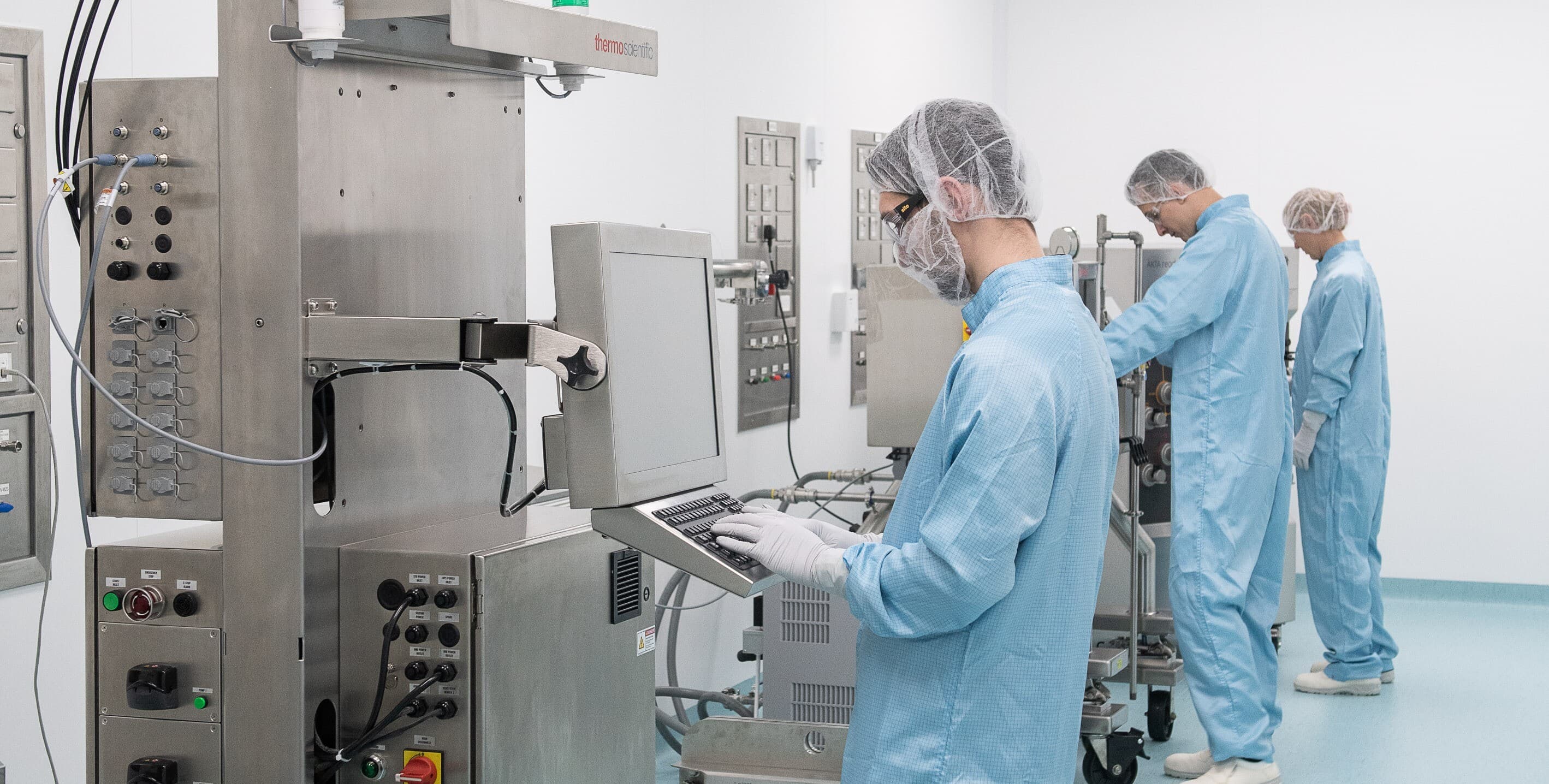
The current methods for producing advanced therapies are highly inefficient. This restricts the ability to produce these therapies at scale and results in a high manufacturing cost.
A substantive shift in manufacturing technologies, introducing digital and automation platforms and tools, is needed to address these challenges and enable therapies to be more widely adopted for higher prevalence diseases.
For example, digital capabilities have been established for both viral vector processes and cell products. These can be used to integrate and control higher-density automated processes, analytical platforms, and quality control systems.
The advanced therapies industry is also looking at how to introduce more sustainable methods and technologies into development and manufacturing. This will not only reduce the environmental impact of this field, but help lead to improvements in efficiencies that reduce costs and enable therapies to be produced at scale and for diseases with larger patient populations.


Ensuring a strong supply
As the number of clinical trials and approved therapies increase, there needs to be a substantial and robust manufacturing sector capable of meeting the demands of this rapidly expanding uptake.
Working towards this, manufacturing infrastructure in the UK has continued to grow, with many companies either investing in in-house manufacturing operations, or partnering with the established contract manufacturing (CDMO) industry.
Helping the testing and adoption of innovative, high-throughput manufacturing technologies in these settings will be key for industry to produce therapies more efficiently, sustainably, and at the large scales that will be needed in the years to come. This needs to be supported by a skilled workforce, with expertise in applying these technologies.
36 licensed manufacturers of advanced therapies in the UK56,419m² total ATMP GMP manufacturing facility space
Skills and training in 2024/2025
77 companies worked with upskilling and training1,084 people upskilled and supported with training228 ATAC apprentices
40 companies employing ATAC apprentices
Enabling high uptake across the UK
UK decision-making bodies have made various updates which help to create an environment that supports the uptake of advanced therapies.
The NHS commercial framework was updated in January 2025 following a public consultation. Key highlights from the updates include an increase in the net budget impact threshold from £20m to £40m per year in the first three years after launch of a new medicine. This change will make it more feasible for high-cost therapies to be recommended in the NHS for larger populations.
The framework also introduced indication-based pricing, allowing medicines that target multiple indications to be commissioned at different prices. This allows flexibility in cases where the level of clinical benefit that a therapy offers differs between indications.
In addition, a more pragmatic approach to pricing can now be achieved through a framework that allows companies that manufacture different medicines that will be delivered as a combination to discuss pricing as a whole. This will help enable the combination to be offered at a cost-effective price overall.
A further positive update was the relaunch of the MHRA’s Innovative Licensing and Access Pathway (ILAP), the only end-to-end access pathway where developers can engage with regulators, health technology assessment (HTA) bodies and the NHS, maximising chances of therapies being adopted


The future
Advanced therapies are revolutionising the way we treat diseases, and their application is widening from rare genetic disorders to higher prevalence conditions. With the right focus and collaboration, the UK is well-positioned to solidify its role as a global leader in this field, turning scientific breakthroughs into real-world treatments that improve lives and ease the burden on healthcare systems
To make the most of this opportunity, the advanced therapies sector must continue to evolve. That includes speeding up innovation, investing in cutting-edge technologies to lower cost of goods, applying more sustainable manufacturing capabilities to meet a rising demand, and building the healthcare systems and skills needed to deliver these therapies to patients.
CGT Catapult is working closely with partners across this ecosystem to tackle these challenges and unlock the full health and economic potential of advanced therapies across the UK

A quick look at the Financial highlights
Income
| For year ended 31st March 2025 | 2025 | 2024 | 2023 | 2022 | 2021 |
| Innovate UK core grant funding | £16,000,000 | £16,000,000 | £19,400,000 | £14,500,000 | £14,200,000 |
| Third-party grant funding | £28,000,000 | £24,100,000 | £26,200,000 | £34,500,000 | £34,500,000 |
| Industrial Income | £16,300,000 | £22,000,000 | £23,600,000 | £25,300,000 | £21,200,000 |
| Total | £60,300,000 | £62,100,000 | £69,200,000 | £74,300,000 | £69,900,000 |
Balance sheet
| For year ended 31st March 2025 | 2025 | 2024 | 2023 | 2022 | 2021 |
| Fixed assets | £72,000,000 | £75,000,000 | £82,500,000 | £81,800,000 | £74,600,000 |
| Net current assets | £22,800,000 | £37,500,000 | £30,400,000 | £34,400,000 | £28,300,000 |
| Creditors | (£8,100,000) | (£18,200,000) | (£11,600,000) | (£17,600,000) | (£17,100,000) |
| Provision for liabilities | (£18,000,000) | (£20,100,000) | (£20,300,000) | (£19,900,000) | (£13,600,000) |
| Net assets | £68,700,000 | £74,200,000 | £81,000,000 | £78,700,000 | £72,200,000 |
| Capital and reserves | £68,700,000 | £74,200,000 | £81,000,000 | £78,700,000 | £72,200,000 |